Edible Flowers Grow Guide
Updated
Grow marigolds, violas, and borage in your Flex Farm at a pH of 6.0 to 6.5, with 16 to 18 hours of light and nutrients at +700 PPM. They may start flowering as early as 6 to 8 weeks from seed planting.
Add flowers to your Flex Farm and your plate with our Edible Flower Seed Bundle! This vibrant trio is perfect for turning salads, desserts, and drinks into edible works of art. Grow beauty you can taste and display!
Each seed packet is carefully selected and hand-packaged to ensure the highest quality and germination rates.
The Edible Flower Bundle Includes:
- Marigolds
- Violas
- Borage
Seed Quantities:
There are approximately 50 seeds per seed packet (~150 seeds total). Please note that seed varieties may vary slightly due to availability.
More About Edible Flowers:
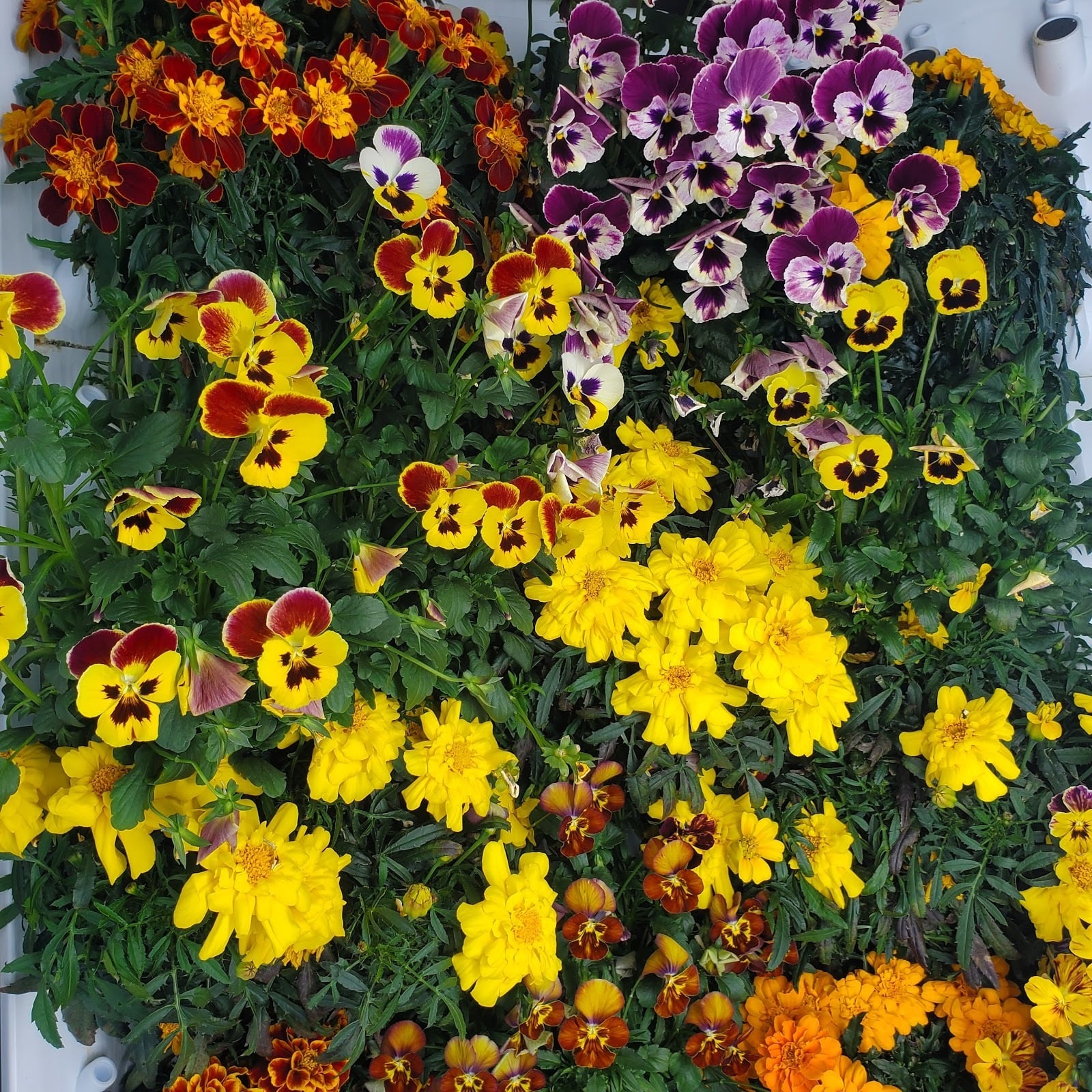
Marigold seeds produce large, fragrant blossoms accented by subtle hints of citrus and spice. The petals are ideal for garnishing salads and desserts. Be sure to remove the flower’s base (non-petal parts), as they can be very bitter.
Violas have a mild, slightly sweet, floral flavor with occasional minty notes. They are best used fresh as a garnish; they add subtle flavors and visual appeal to salads, desserts, and drinks. More valued for its beauty than bold taste.
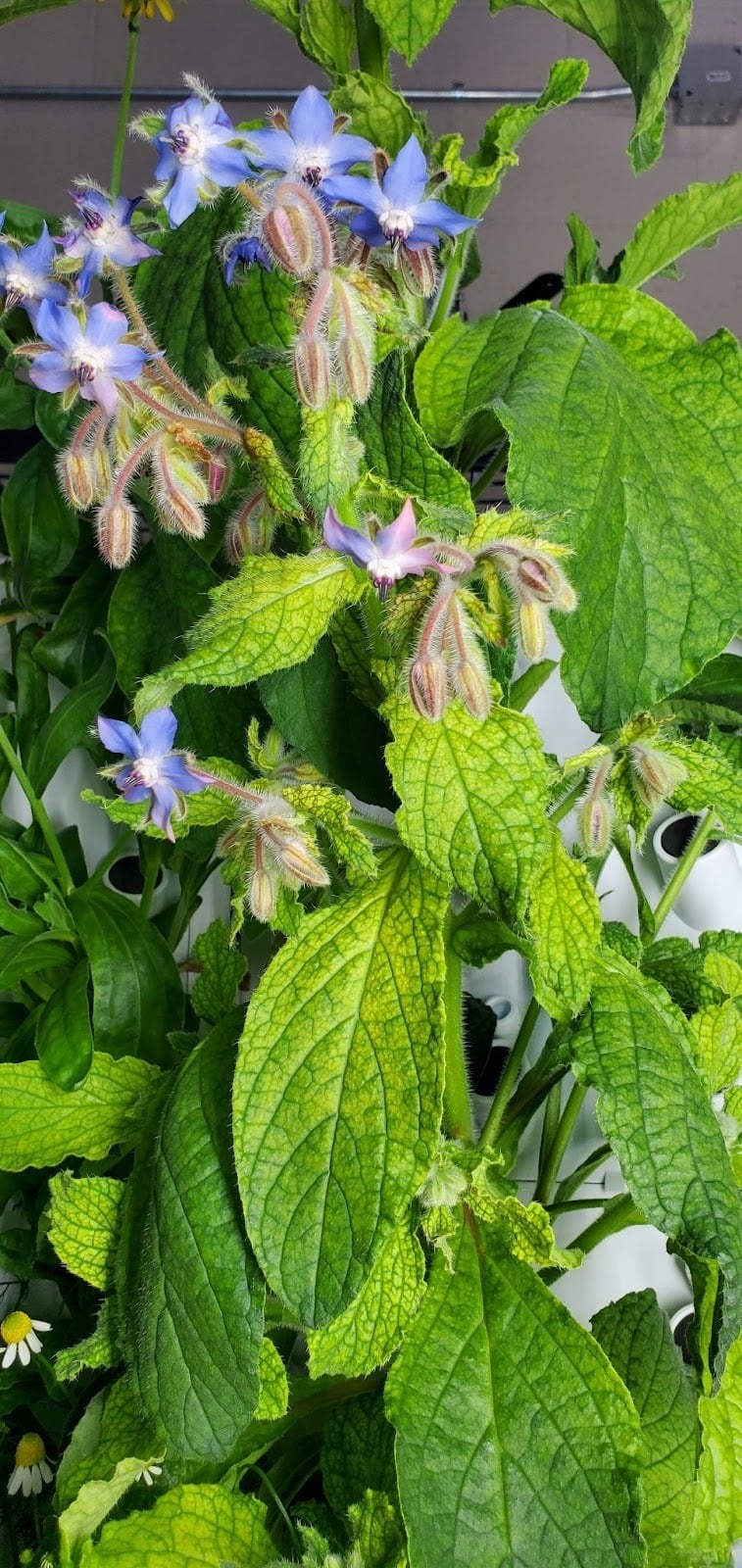
Borage has a clean, cucumber-like flavor with sweet notes. When fresh, its star-shaped blue flowers are used to garnish salads, desserts, and drinks, adding a light, refreshing taste. The young leaves share the flavor but are best when cooked due to their sometimes coarse textures.
General Guidelines
Nutrients:
- Regular Flex Farm Nutrients and Fruiting Nutrients work for the edible flowers. Both varieties can be purchased on the Fork Farms Store.
- Follow our +700 PPM standard dosing guideline using either set of nutrients. If using Fruiting Nutrients, following a similar dosing guideline of +800 PPM or +900 PPM may encourage earlier flowering.
- Edible flowers can be grown with other leafy greens, herbs, and fruiting plants.
Growing Details:
pH: 6.0 - 6.5
Light: 16-18 hours per day
Temperature: 65-80°F
Relative Humidity: 40-70% for optimal growing
Germination: 4-14 days
- Marigolds: 4-14 days
- Violas: 10-14 days
- Borage: 5-10 days
Flowering:
- May start flowering as early as 6-8 weeks from seed planting
- Marigolds: 45-60 days
- Violas: 50-70 days
- Borage: 60-75 days
Plant Spacing in the Flex Farm:
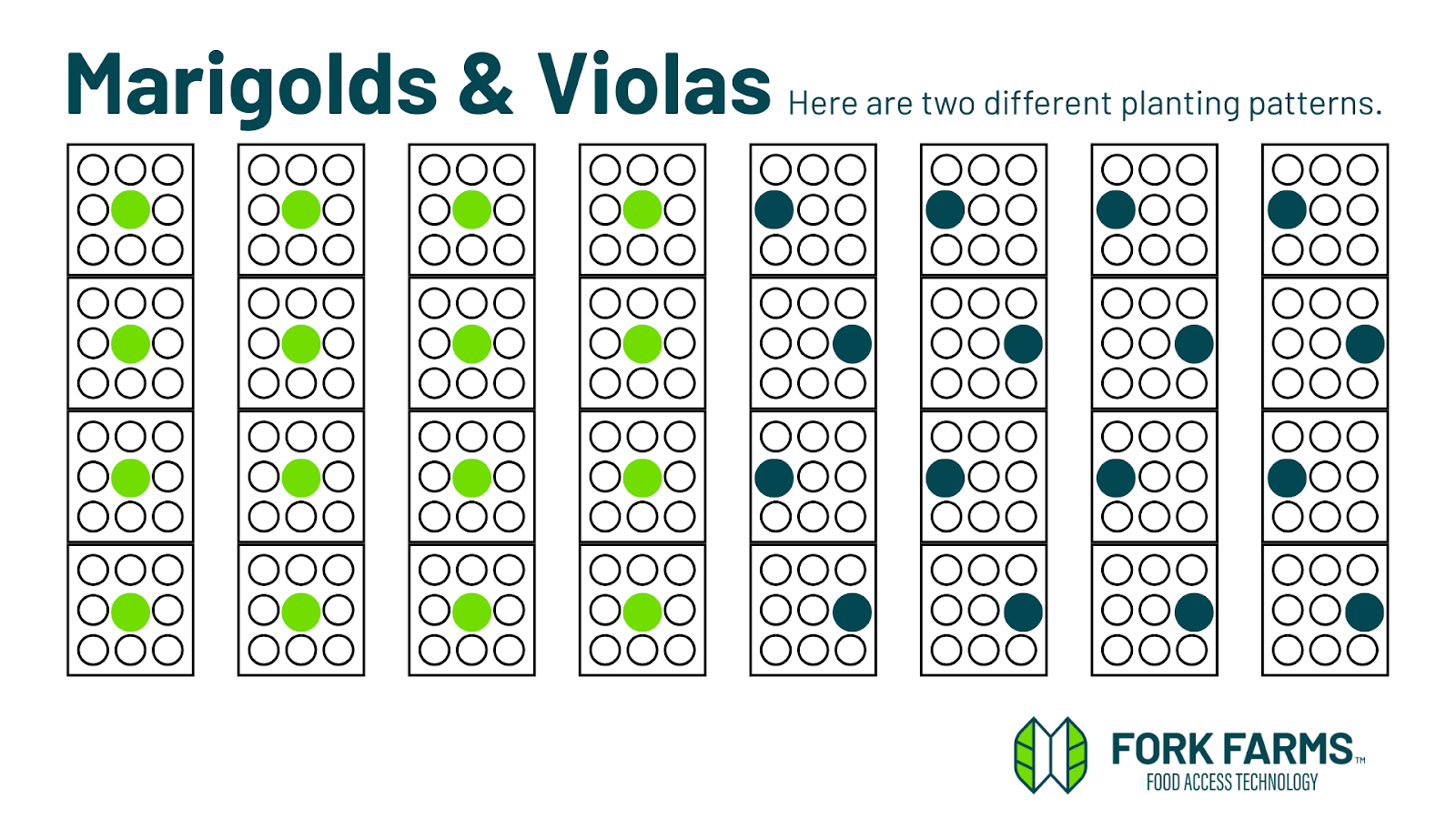
- Marigolds and Violas can be planted one per panel (center hole in each square panel).
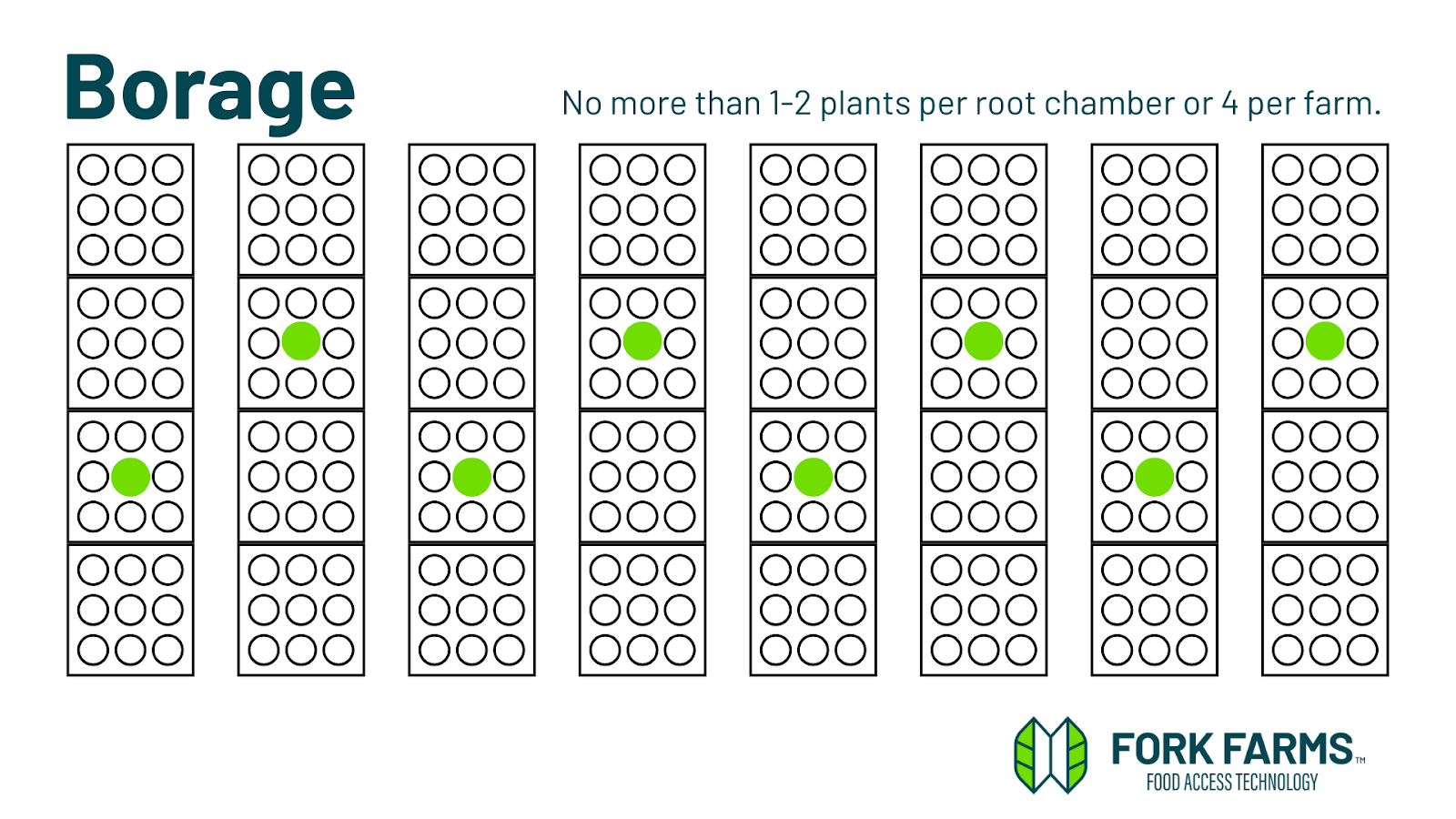
- Borage should be transplanted no more than one to two plants per root chamber (top panel’s center hole and/or the 3rd panel’s center hole). Fork Farms recommends transplanting no more than 4 borage plants per farm, as they are heavy water consumers.
- Refer to our planting patterns below for each variety.
- Flower varieties may benefit from dowels and clips if they become top-heavy with flowers.
Planting Seeds:
- Dampen the desired number of rockwool cubes in a nursery tray, then drain any excess water.
- Place two seeds in each rockwool cube to ensure successful germination. Mist each cube thoroughly to dampen the seeds.
- Cover the nursery tray with a clear bag or humidity dome to maintain humidity. Place the tray in a location that receives light. Many partners place their nursery trays on the tank lids next to their light tower or under a different light setup designed for seed germination.
- Our new Flex Micro is ideal for germinating seeds.
- Marigold and viola seeds prefer some light for germination.
- Mist your seeds 1-2 times per day until they sprout.
- Once seeds begin to germinate, seedlings will require 18-24 hours of light until they are large enough for transplanting into your Flex Farm.
If both seeds planted in a rockwool cube germinate: Allow both seedlings to grow until they are at least one to two inches taller than the rockwool cube hole. When ready to transplant, gently pull the smaller seedling out of the rockwool. This will allow the larger seedling to continue growing with less competition for resources and space.
Transplanting:
Once your seedlings are at least one to two inches taller than the rockwool cube hole, they are ready for transplant.
- Gently pull the smaller seedling out of the rockwool, leaving the larger seedling in the rockwool. This will allow the larger seedling to continue growing with less competition for resources.
- Then, carefully place the rockwool cube into the desired panel hole.
- Fork Farms recommends transplanting one marigold or viola plant per panel, in the center panel hole, to allow for proper spacing.
- We also recommend planting one to two borage plants per long root chamber, or no more than four borage plants per Flex Farm, as they can get quite long and lush.
Note: Borage is also a heavy water drinker, so too many borage plants in one farm could run the risk of low water levels and more frequent tank refills.
Please refer to the recommended planting patterns for the flowers below, with the special notes on each image.
Growing Maintenance:
Check and maintain water, nutrient, and pH levels weekly:
Note: You may notice a need to add water, nutrients, and pH solution to your tanks two or more times per week if growing borage. Borage is a heavy water drinker, so a high concentration of this variety (four or more plants per farm) could lead to low water levels and require more frequent tank refills. Be vigilant and check your water levels frequently.
Managing blooms: As the flowering plants grow and mature, they will begin to bloom. If they become top-heavy with flowers, use a dowel and trellising clips to support their stems.
Pruning: Throughout their growth, be sure to prune by removing any brown, yellow, crispy, or dead leaves from the plant. This deters pests and disease.
Note: To extend the flowering, snip or gently pinch off a few flowers from each plant weekly to encourage more blooms. This signals to the plants that their flowers are dispersing seeds, prompting them to put more energy into producing new flowers.
Mold/Mildew: If you notice any mold or mildew caused by trapped humidity, remove any affected leaves and thin the foliage. This will increase air circulation between the plants and the panels.
Note: Adding a fan to the space can also help increase airflow.
Growing Time: You can keep your edible flowers in your Flex Farm for three to four months with no to minimal upkeep. Alternatively, you may keep them for a maximum of five months by consistently trimming foliage and pruning dead, brown, or crispy leaves to improve optimal airflow and reduce mold growth.
Harvesting:
Flowering may start as early as six to eight weeks from planting seeds. Marigolds take approximately 45-60 days to flower, violas take about 50-70 days, and borage takes around 60-75 days to flower. When the flowers are fully developed and wide open, it is time to harvest.
- Gently pinch or snip the flower at the base of the bloom to remove it from its stem (the peduncle).
Note: Violas are delicate, so handle them with care.
Note: Borage will produce many small flowers. Try to pick them as they open or right before they open; otherwise, many flowers may fall onto the floor and tank lids. You can also harvest 'heads' of borage flower clusters from the plant and pick the flowers from the bunches.
How to eat your flowers:
Always follow proper food safety guidelines when handling and processing your edible flowers. If you are growing edible flowers for a restaurant or market, check your local regulations regarding the sale of edible flowers.
You can eat the petals from all of our edible flower varieties. Gently remove all the petals from the flower’s green base. Do not eat any green flower parts or the base of the flower, as they are extremely bitter and not recommended. Edible flowers can be added to your salads, drinks, lunches, desserts, and snacks.
You can store harvested flowers on a sheet of paper towel in a sealed container inside the refrigerator for three to four days. For longer storage, you can freeze them in ice cubes or sugar. If drying your edible flowers for later use, be sure to use only food-grade drying agents. Marigolds and violas dry well. However, borage flowers do not, so it is best to use them fresh.
For Teachers/Students: Have fun with the senses while trying the edible flowers in the classroom. Write how each flower variety looks, feels, tastes, and smells. Compare with other crops you have grown in your Flex Farm for additional discussion.
Additional Notes:
- Other fun classroom activities to try with your edible flowers are DIY watercolors and flower pressing. Marigolds and violas dry well, so they are fun to try flower pressing with. Borage flowers do not dry well, so it is best to use them fresh.
- Borage leaves can also be harvested and are best when they are young and tender.
- If you are nearing warmer weather, you can transplant marigolds and violas into pots to take them home to your own outdoor gardens. Since hydroponic plants hadn’t experienced outdoor living, be sure to carefully harden them off to their new outdoor growing conditions. Read our blog article to learn how to harden off your hydroponic plants.